

 written by
 The global AI race is no longer defined solely by model accuracy or scale. It is increasingly shaped by control over data, compliance with evolving regulations, and ownership of computational resources. Enterprises are shifting away from dependence on centralized hyperscalers toward sovereign AI infrastructure that ensures data residency, operational autonomy, and long term strategic resilience.
Recent peer reviewed research underscores this shift. Kshetri 2023 in IEEE IT Professional identifies data sovereignty as a foundational pillar of digital transformation strategy. Li et al. 2024 in Nature Machine Intelligence further demonstrate that decentralized AI systems outperform centralized models in latency sensitive environments, particularly in edge deployments.
Why Sovereign AI Infrastructure Matters Now
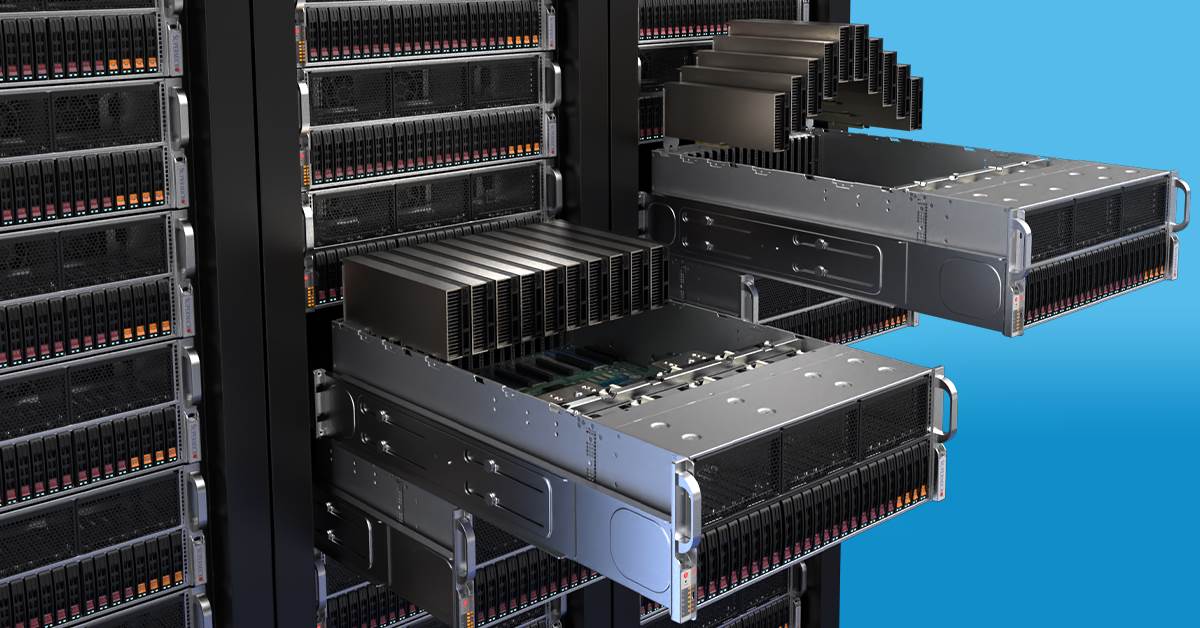
Sovereign AI refers to building and controlling the full artificial intelligence stack including compute, data, and models within defined organizational or national boundaries. Its urgency is driven by three converging forces.
First, regulatory pressure is intensifying. Frameworks such as the EU GDPR, India’s Digital Personal Data Protection Act, and China’s PIPL are enforcing strict controls on how and where data is stored and processed. Organizations must now architect systems that are compliant by design.
Second, enterprises are actively de risking cloud dependence. Vendor lock in, pricing volatility, and geopolitical risks are pushing companies toward hybrid or fully sovereign deployments.
Third, the rise of edge intelligence is transforming infrastructure needs. Applications such as autonomous systems, smart manufacturing, and real time analytics require ultra low latency processing. Research published in ACM Computing Surveys 2023 shows that edge AI architectures can reduce latency by up to 60 percent compared to centralized systems.
Core Architecture of Sovereign AI Infrastructure

A sovereign AI stack is composed of four tightly integrated layers.
Compute Layer: Hybrid GPU and Edge Clusters
Organizations deploy on premise GPU clusters for sensitive workloads, complemented by edge nodes for real time inference. Sovereign cloud regions may be used selectively for burst capacity. Kubernetes based orchestration enables portability and resilience across environments.
Data Layer: Federated and Privacy Preserving Pipelines
Data remains localized through federated learning, minimizing exposure while enabling collaborative model training. Secure data clean rooms and confidential computing techniques allow encrypted data processing. A 2022 study in Nature Communications found that federated learning achieves near parity with centralized models while preserving privacy.
Model Layer: Open Weight and Domain Specific Systems
Enterprises are increasingly adopting open weight models such as LLaMA and Mistral, fine tuning them on proprietary datasets. This approach enhances explainability, reduces inference costs, and ensures intellectual property ownership.
Control Layer: Governance, Observability, and Compliance
Robust governance frameworks include model auditing, drift detection, and policy enforcement aligned with regulatory requirements. Findings from Harvard Business Review 2024 indicate that organizations with mature AI governance frameworks achieve higher returns and lower risk exposure.
Step by Step Implementation Roadmap
Phase 1: Strategic Assessment
Identify sensitive data flows, classify workloads based on regulatory exposure, and define sovereignty requirements aligned with business objectives.
Phase 2: Infrastructure Design
Select a hybrid or fully on premise architecture. Design GPU clusters, edge nodes, and secure networking layers. Establish encrypted and compliant data pipelines.
Phase 3: Model Strategy
Audit existing AI dependencies and reduce reliance on external APIs. Transition to open or internally controlled models. Build fine tuning pipelines using domain specific datasets.
Phase 4: Deployment and Scaling
Launch pilot deployments for high impact use cases. Implement MLOps pipelines for continuous integration and delivery. Scale infrastructure across business units.
Phase 5: Governance and Optimization
Create AI governance boards and compliance frameworks. Continuously monitor model performance, bias, and drift. Optimize infrastructure costs while maintaining performance.
Emerging Trends Shaping Sovereign AI

Confidential computing is enabling secure processing of encrypted data using hardware based secure enclaves. This significantly reduces exposure risks in sensitive environments.
Distributed AI or AI mesh architectures are emerging, where multiple interconnected models operate across nodes instead of relying on a single centralized system.
Synthetic data is gaining traction as a compliance friendly alternative to real datasets. A 2023 paper in IEEE Transactions on Neural Networks and Learning Systems found that synthetic data can improve robustness by up to 35 percent in constrained training environments.
Actionable Angles for Further Exploration
One approach is to examine the economic implications of sovereign AI adoption, particularly how enterprises are reallocating billions from cloud spending into owned infrastructure.
Another angle is a deep technical exploration of zero trust AI systems, focusing on how cybersecurity principles integrate with machine learning pipelines.
A third direction is a leadership focused narrative, offering a practical playbook for CTOs transitioning from cloud dependence to AI independence.
SEO Optimized Headlines
Build Sovereign AI Infrastructure: The Enterprise Guide to Data Control and Edge Intelligence
How Companies Are Replacing Cloud AI with Sovereign AI Systems in 2026
The Rise of Sovereign AI: Architecture, Strategy, and Competitive Advantage
Subtopics for Expansion
Federated learning versus centralized AI performance trade offs in regulated industries
Cost modeling and ROI analysis of sovereign AI versus cloud based AI
Designing AI systems for regulatory compliance across multiple jurisdictions
Final Insight
Sovereign AI infrastructure represents a structural shift in how intelligence is produced, governed, and scaled. It is not simply an architectural choice but a strategic necessity in a fragmented digital world. Organizations that invest early in sovereign capabilities will gain a decisive advantage in compliance readiness, operational resilience, and innovation velocity.